Trucks With the Most Torque Output

Among passenger cars, it’s all about horsepower. When it comes to trucks, the important number is torque. That’s the lower-end grunt that gets the load or the trailer moving.
Fleets and businesses can use all sizes of trucks, and we’ve listed these 2026 model-year versions from compact to heavy-duty. We’ve also broken down the numbers by gasoline, diesel, and in some cases, by hybrids.
Midsize Trucks
There are seven competitors in this category, and the overall winner is the Toyota Tacoma Hybrid, which is also the only hybrid in the category (the Ford Maverick also offers a hybrid, but it’s in the compact segment). The Toyota “Taco” uses a turbocharged 2.4-liter four-cylinder with hybrid system, and that produces 465 lb-ft of torque. In its gas-only version, the Tacoma makes 243 lb-ft when equipped with its available six-speed manual transmission, and 310 lb-ft with an automatic.
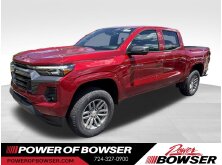
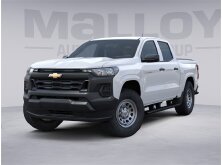
There’s a tie among the other gas-only models, although there’s a bit more to that story. The mechanical twins of the Chevrolet Colorado and GMC Canyon use a turbocharged 2.4-liter four-cylinder, and it makes 430 lb-ft of torque. The Ford Ranger does as well, but only with its available EcoBoost (turbocharged) 3.0-liter V6, and that’s only in the Ranger Raptor, which many would consider a “lifestyle” truck rather than a work model—but hey, a tie is a tie!
The Ranger offers two other engines: a 2.3-liter EcoBoost inline-four making 310 lb-ft of torque; and a 2.7-liter EcoBoost V6 making a respectable 400 lb-ft. Others in this segment are the Nissan Frontier, with a 3.8-liter V6 making 281 lb-ft; the Honda Ridgeline with a 3.5-liter V6 and 262 lb-ft; and the off-road-ready Jeep Gladiator, with a 3.6-liter V6 churning out 260 lb-ft of torque.
Full-Size Light-Duty Trucks
This segment has the most buyer overlap between consumer and commercial trucks, so it’s a crowded one. There are gasoline, diesel, hybrids, and some high-performance just-for-fun models that really push the envelope.
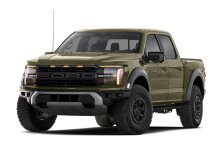
Unsurprisingly, that last niche takes the top spot, at least for 2026. That’s the Ford F-150 Raptor, which with its high-output 3.5-liter EcoBoost V6 makes 510 lb-ft of torque. As for the Raptor R with a 5.2-liter supercharged V8, it takes things up to 640 lb-ft. Ram and Ford have long been the top contenders in the torque wars, and for 2027 Ram will roll out the newest version of its TRX, with a supercharged 6.2-liter V8 making 680 lb-ft of torque (along with 777 horsepower).
Only General Motors offers a light-duty turbodiesel in this segment, a 3.0-liter inline-six in its Chevrolet Silverado and GMC Sierra, and it rates 495 lb-ft of torque.
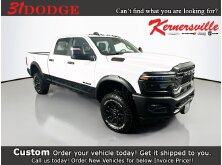
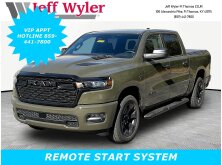
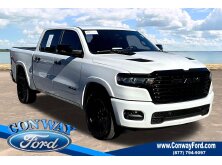
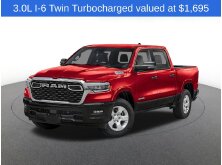
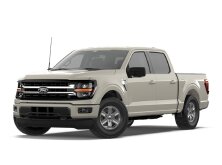
Among gasoline competitors, most offer more than one choice. In this category, the Ram 1500 takes the crown with the available high-output version of its turbocharged 3.0-liter inline-six at 521 lb-ft. Ford isn’t far behind with its 3.5-liter EcoBoost V6, available in some trims in the F-150, at 500 lb-ft of torque. Other gas engines range from 271 lb-ft in the Ram 1500’s 3.6-liter V6 (which has eTorque, a mild-hybrid system that assists with fuel economy but can’t drive on its battery alone), to 479 lb-ft in the gas-only Toyota Tundra and its 3.4-liter turbocharged V6.
There are also two hybrids in this segment, and the Toyota Tundra is the highest at 583 lb-ft from its 3.4-liter turbocharged V6 with a hybrid system. Ford has a hybrid option on its F-150, which it calls PowerBoost, making 570 lb-ft. Both switch automatically between gasoline, electricity, or a combination depending on driving conditions. Both can drive on the battery alone, but it’s limited—they’re not simply oversized versions of the Toyota Prius. Instead, the combined gas-and-electric provides those robust power numbers without moving up to a larger and thirstier gas-only powertrain. For the Tundra, the gas-only version makes 479 lb-ft of torque and is rated by the EPA at 20 mpg, while the hybrid makes 583 lb-ft and rates 22 mpg.
Heavy-Duty Trucks
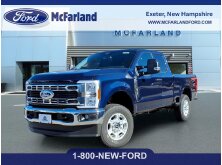
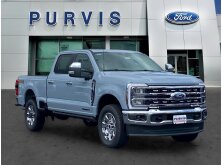
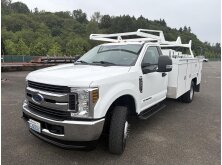
Three major Detroit automakers offer heavy-duty trucks: the Chevrolet Silverado 2500 and 3500 (by General Motors); GMC Sierra 2500 and 3500 (also by GM); Ford F-250, F-350, and F-450; and the Ram 2500 and 3500. All are available with gasoline or diesel engines, and they’re the same rating across the board in each automaker’s trucks, where the differences between 250/2500 and 350/3500 are primarily in payload and towing capacity. None of the heavy-duty trucks offer a hybrid option.
For gasoline, the torque winner is the Ford F-250 with a 7.3-liter V8 engine making 485 lb-ft. It’s also available with a 6.8-liter V8 making 445 lb-ft. The Chevrolet and GMC trucks use a 6.6-liter V8 making 464 lb-ft, while Ram’s 6.4-liter V8 makes 429 lb-ft.
For diesel, the Chevrolet/GMC twins are the lowest, with a 6.6-liter V8 making 975 lb-ft. Ram’s 6.7-liter inline-six makes 1,075 lb-ft. Ford starts out with a 6.7-liter V8 making 1,050 lb-ft but also offers a high-output version that wins with 1,200 lb-ft.
Marketplace Inventory
What These Numbers Mean to Truck Buyers
There are bragging rights to having the highest torque numbers, but they’re only part of the story. It’s essential to look at the whole package, including towing and payload capacity, axle ratios, how the truck drives, and if it has the features you want. The best truck is always the one that’s right for you.
Jil McIntosh
You might also like


